Atelophobia
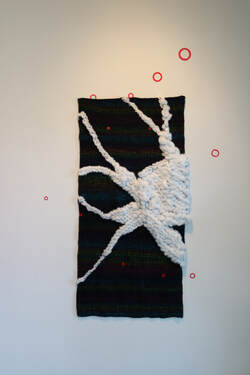
Atelophobia- 6"x3" (varies)- yarn, roving, vinyl, plastic.
Atelophobia- "fear of being imperfect or never being good enough"
I am interest in the idea and obsession of perfection, when we look at artwork in a museum or gallery as a viewer we assume and see the artwork as perfect especially with the greats like Picasso and Monet. In this piece I am interested is the issue that I deal with as an artist of battling dysphoria in my work. I have a compulsion of every time I received commentary whether positive or negative I point out every flaw within the art piece. With this piece I chose to weave an image of a neuron and use red circles made from plastic or vinyl to highlight all the flaws within the weaving and all the dings and imperfections in the wall, ceiling, floor around the piece and try to battle that fear of not being perfect and attempt to find some kind of beauty or at least some way to deal with it within myself.
Atelophobia- "fear of being imperfect or never being good enough"
I am interest in the idea and obsession of perfection, when we look at artwork in a museum or gallery as a viewer we assume and see the artwork as perfect especially with the greats like Picasso and Monet. In this piece I am interested is the issue that I deal with as an artist of battling dysphoria in my work. I have a compulsion of every time I received commentary whether positive or negative I point out every flaw within the art piece. With this piece I chose to weave an image of a neuron and use red circles made from plastic or vinyl to highlight all the flaws within the weaving and all the dings and imperfections in the wall, ceiling, floor around the piece and try to battle that fear of not being perfect and attempt to find some kind of beauty or at least some way to deal with it within myself.
